Zhongyuan Festival vs. Halloween: How Chinese People View Ghosts
On Halloween, Westerners dress up as ghosts and knock on doors for candy. On Zhongyuan Festival, Chinese people burn paper money to give wandering ghosts a meal. Both are festivals about ghosts, but the understanding of ghosts is completely different.
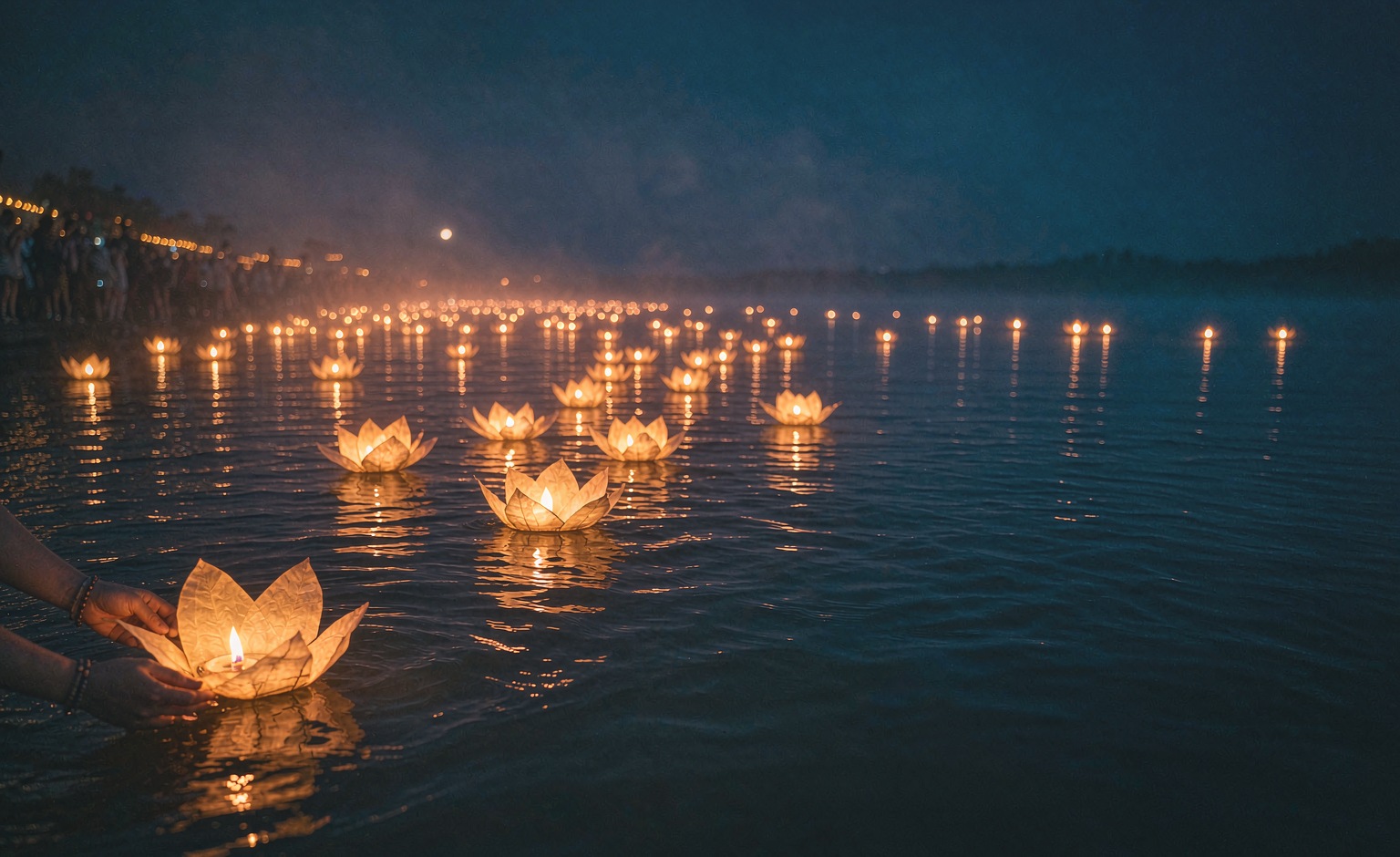
On Halloween, Westerners dress up as ghosts and knock on doors for candy. On Zhongyuan Festival, Chinese people burn paper money to give wandering ghosts a meal.
On Halloween, Westerners dress up as ghosts and knock on doors for candy.
On Zhongyuan Festival, Chinese people burn paper money to give wandering ghosts a meal.
Both are festivals about ghosts, but the understanding of ghosts is completely different.
1. Zhongyuan Festival: The Day the Gates of Hell Open
Zhongyuan Festival falls on the 15th day of the 7th lunar month. It is commonly known as the "Ghost Festival."
Legend says that on this day, the gates of hell open wide. Ghosts are released to wander the human world.
So on this day, elders tell children to go home early, not to run around outside, and not to step on the paper money left on the street.
But in this legend, the ones who need attention most are not scary ghosts, but the masterless wandering ghosts.
They have no one to worship them, no incense, and they starve in the underworld. When the gates open, they come out to celebrate the festival and look for a meal.
2. Halloween Ghosts Are Here to Cause Trouble
In the West, Halloween ghosts are about pranks, scares, and mischief.
Children say "trick or treat," meaning if you don't give candy, I will make trouble.
Halloween ghosts are here for candy.
3. Zhongyuan Ghosts Are Souls with No One to Worship Them
In China, ghosts on Zhongyuan are not here to cause trouble.
They are souls with no one to worship them.
Ancient Chinese believed that after death, someone must offer incense, burn paper, and set out food. This is called incense fire. As long as someone worships, the soul has food and money in the underworld.
But some people have no one to worship them:
- Those who died far from home.
- Those without descendants.
- Those whose incense fire is broken.
These wandering ghosts have no one to care for them, no food, and they starve.
So Zhongyuan is about giving these ghosts a meal.
4. Shigu and Burning Street Clothes: Giving Wandering Ghosts a Full Meal
The tradition is to burn paper, but not just for family ancestors.
In the seventh lunar month, if you walk on the streets in Guangdong, you will see many people squatting by the road burning things. This is called "burning street clothes" (烧街衣).
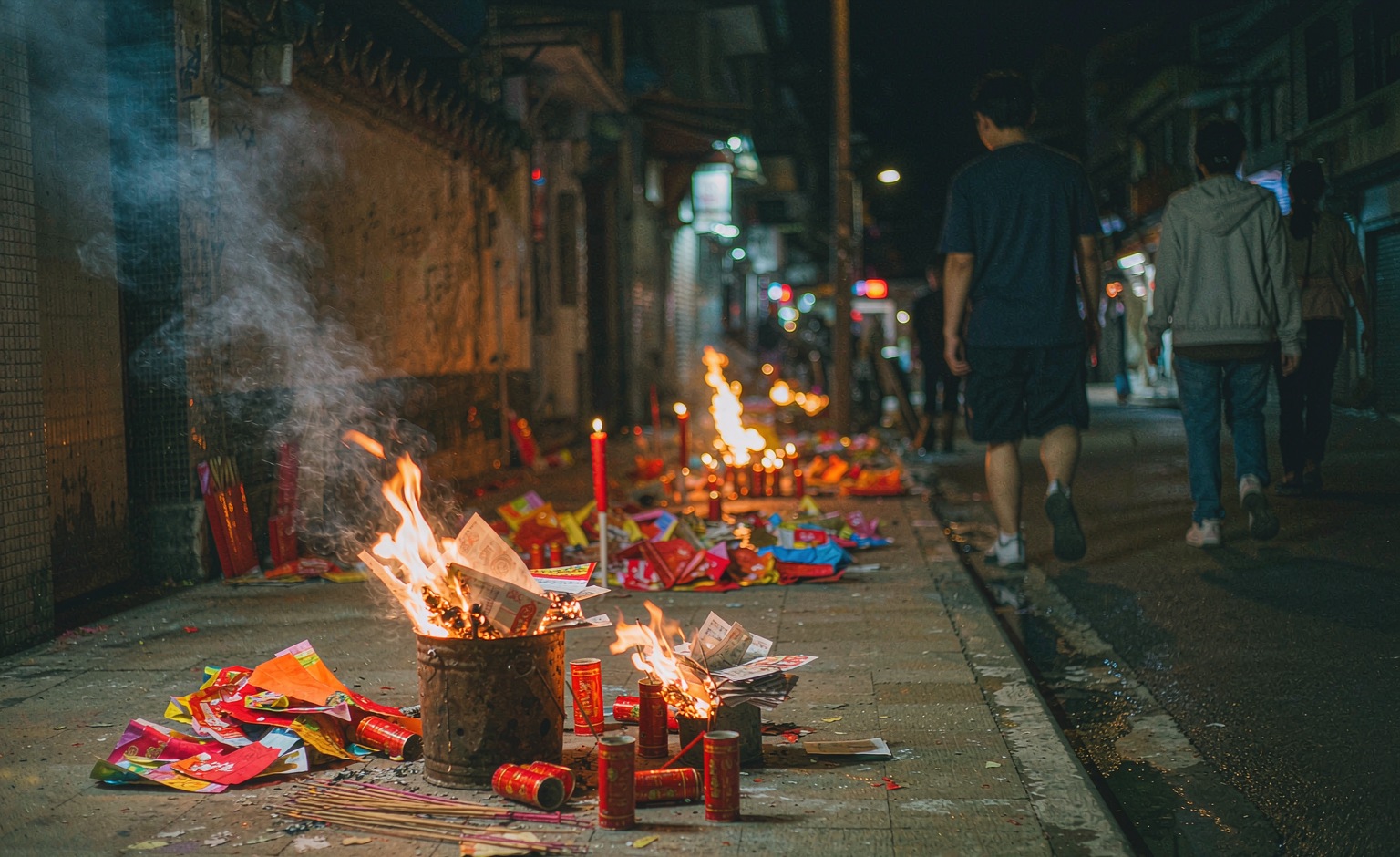
People burn paper clothes and paper money for those wandering ghosts who have no clothes to wear and no money to spend in the underworld. It is an act of charity, meaning: the weather is getting cold, even these masterless ghosts should have a piece of clothing and a meal.
There is also a custom called Shigu (giving alms to the lonely). In Chaoshan, Guangdong, people set up altars on the street, full of food and paper money, meaning: today, even though no one worships you, you can still have a full meal.
5. Why Chinese People Care So Much About Incense Fire
Because incense fire means: after death, does anyone still care about you.
If it breaks, your soul becomes a masterless wandering ghost. No one offers incense, no one burns paper, you have no food in the underworld.
So the ghosts of Zhongyuan are not here to scare people. They are here to beg for food.
6. The True Meaning of Zhongyuan
Halloween ghosts are here to cause trouble. Zhongyuan ghosts are here to beg for food.
The Chinese attitude toward wandering ghosts is not fear, and not driving them away, but pity.
Shigu and burning street clothes are fundamentally charity. We don't know you, but you shouldn't starve or freeze in the underworld.
This is the true meaning of Zhongyuan: not creating horror, but leaving a meal for those who are forgotten.
Closing
On Halloween, we dress as ghosts and ask for candy.
On Zhongyuan, we burn paper and give ghosts a meal.
Westerners fear ghosts.
Chinese people fear that ghosts have no one to worship them and no food to eat.
Not sure which element is missing from your chart? Take the free Five Elements test at wuxingvibe.com/reading — it takes 60 seconds, and it tells you which stones are for you.
A note from us
We are not historians. We are people from Guangzhou who grew up with these stories. We share them for one reason: the East often looks mysterious, and sometimes frightening — but fear usually comes from not knowing. The more you know, the less there is to fear. And sometimes, the more you know, the more it can help you.
If you enjoyed this, you can reach out to us. You can also take our free Five Elements test — it takes 60 seconds, and it tells you which element you may be missing.
We hope everything goes smoothly for you. And if you ever come to China, we'd love to show you around.
Find your element
Take the free Five Elements test