Why Chinese Family Trees Only Record Sons
Open an old Chinese family tree, and you will see one clear thing: it is almost entirely men's names. Sons are recorded. Daughters are not. The first answer is 'favoring sons over daughters.' That answer is correct, but incomplete.
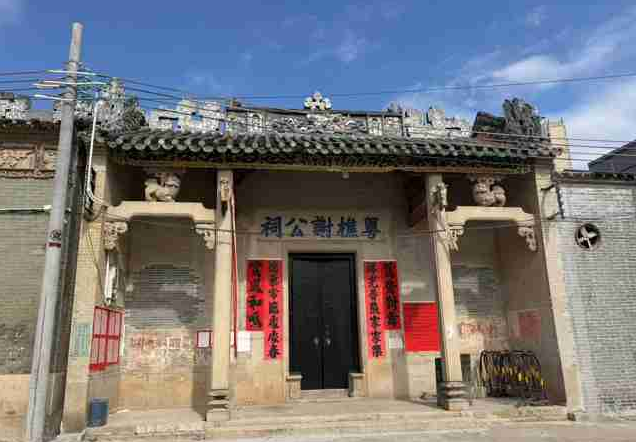
Open an old Chinese family tree, and you will see one clear thing: it is almost entirely men's names. Sons are recorded. Daughters are not. This is the story of why — and of the women whose names were left out.

Open an old Chinese family tree, and you will see one clear thing: it is almost entirely men's names.
Sons are recorded. Daughters are not. When a son marries, it notes who he married. When a daughter marries, it notes who she married — but the daughter herself does not enter this genealogy.
The first reaction for many is: this is just favoring sons over daughters.
That answer is correct, but incomplete. To understand it, you have to start with one character: ding.
1. What is ding?
Ding (丁) means an adult male.
In the Shuowen Jiezi, the ancient dictionary of Chinese characters, it says: ding, strong. In ancient times, adult men were called ding, and adult women were called kou (口). Ren ding (人丁) means the adult men of the household. Tian ding (添丁) means a son was born.
The character itself is also often interpreted as the shape of the male organ. So the word ding was tied to maleness from the start.
Nan ding (男丁) is not "man plus ding." Nan and ding already mean the same thing. They are combined for emphasis: this is the adult male who can hold up the family.
2. Only ding can carry the surname line
Why ding and not kou?
Because in traditional society, ding had strength.
Ding served corvée labor. Ding paid the head tax. Ding was the labor for farming, war, and holding up the family's face. Ding was the person who carried the surname line down the genealogy.
Why was ding so important? Because in ancient times, a clan lived together.
Not one household — an entire clan living in the same village. The ancestral hall, the clan fields, and the clan rules were all shared. For a clan to survive, what did it rely on? Labor.
Farming needed people. Building the ancestral hall needed people. War needed people. Defending the village needed people.
And by nature, men were physically stronger than women. This was not an ideology. It was the reality of that era.
Carrying loads, men carried more. Plowing, men could do it. Fighting, men could go. Corvée labor, men went.
So in a clan, more male ding meant a stronger clan. Fewer people meant the fields could not all be farmed. If the fields could not be farmed, the clan weakened.
Ding was not just one person. He was the clan's labor, its fighting force, its capital for survival.
Daughters could give birth too. But the children a daughter bore took the husband's surname and entered the husband's genealogy. So on this line of the surname, only ding could continue it.
Ding did not mean "able to give birth." Ding meant strength — the ability to hold up this line.
3. Ding carries the incense fire
The line cannot break. And there is a more concrete meaning: the incense fire cannot break.
Xiang huo (香火) — incense fire — literally means incense and fire. The incense that keeps burning, and the lamp that never goes out in the ancestral hall, before the ancestral tablets.
But it means more than that stick of incense. It means: is there anyone still worshipping you?
If someone worships, the incense fire continues. If no one worships, the incense fire breaks.
In traditional China, after a person died, someone had to offer incense, burn paper, and set out food. That person was usually a son. A daughter who married out entered the husband's ancestral hall and worshipped the husband's ancestors.
So having no son meant:
After you die, no one offers you incense. Your life in the underworld has no provisions. The incense fire of your branch is extinguished.
This is why traditional Chinese people cared so much about having sons. Not for the surname — but so that after death, someone still remembers you, and still worships you.
4. Only ding gets a share of the pork
This logic has a very vivid saying in Guangdong: tai gong fen zhu rou (太公分猪肉) — "the great ancestor divides the pork."
The great ancestor means the ancestors. After ancestral worship, the sacrificial meat is divided among the clan.
Who gets it?
By traditional rules, only male ding.
A family with a son has one more ding and gets one more share. A family without a son gets one share less. Daughters are not counted as ding and do not take part.
So "the great ancestor divides the pork" was not just a meal. It was the genealogy logic in live form:
Whoever is on the line gets a share. Whoever is not on the line gets nothing.
What was divided was not just meat. It was identity: are you a person on this line.
5. The extreme case: nine generations of single transmission
This logic has an extreme term: jiu dai dan chuan (九代单传) — "nine generations of single transmission."
It means a family, for nine generations in a row, had only one son each generation. Only through that one son did the line survive.
Imagine this line.
First generation, one son. Second generation, one son. Third generation, one son. All the way to the ninth generation, still only one son.
Every generation was a single seedling.
In every generation, if that son did not survive, did not marry, or did not have a son, the line would break. Nine generations, each one hanging on that single son.
The term is not just a statistic. Behind it is a whole set of anxieties: fear that the son will not grow up, fear that he cannot find a wife, fear that he cannot produce a son. This line, passed down nine generations, depended entirely on one person.
6. Therefore, favoring sons over daughters
Only at this point does "favoring sons over daughters" truly take shape.
It is not just an idea. It is the calculated result of a system.
Ding continues the line. Ding carries the incense fire. Ding gets a share of the pork. Ding is the only treasure in nine generations of single transmission.
And daughters: cannot continue this line, cannot carry the incense fire, get no share of the pork, and are recorded in the genealogy with only one line — "married into such-and-such village and surname."
People on the line and people off the line were treated differently.
7. Where did the daughters go?
Daughters were not forgotten. They were recorded on another line.
In the genealogy, a daughter is usually written in one line: daughter one, married into such-and-such village and surname. Her name might be written once, or not at all. Because in this genealogy, she is not the main line.
She entered another genealogy. The children she bore took the husband's surname, entered the husband's genealogy, worshipped the husband's ancestors, and continued the husband's incense fire. She herself left this line.
8. On the tablet: Chen Huang Shi
This logic finally lands on a tablet in the ancestral hall.
If you look at old ancestral tablets, you will find that women's real names are rarely written. What is written is often: Chen Huang Shi (陈黄氏).
This is not her name. It is two surnames.
Chen is the husband's surname, marking which line she belongs to. Huang is her birth family's surname, used to distinguish which wife she is. Because villages often share one surname. If only Chen Shi were written, no one could tell which wife it was. So the birth family's surname must be added: Chen Huang Shi and Chen Li Shi are two different people.
These two characters on the tablet follow the same logic as the genealogy: she is not a person. She is "the woman from a certain family, on a certain line."
Her real name, from beginning to end, never appears.
The irony
Every generation of men in the genealogy was born from a woman.
But in the genealogy, their names are not recorded.
They gave birth to this line, but were left outside it.
Find your element
Take the free Five Elements test