Every Chinese Family Has That Red Booklet
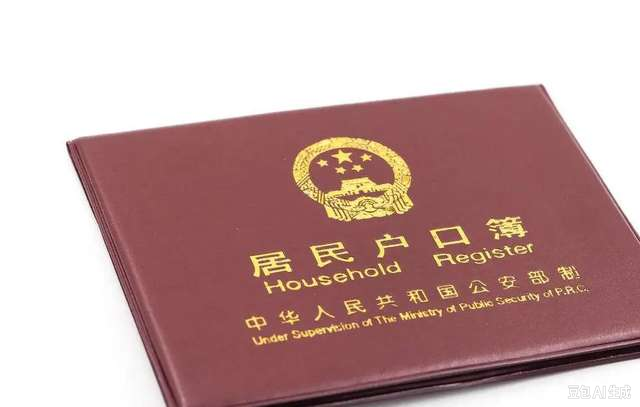
Every Chinese family has a small red booklet at home. It is not Mao's Little Red Book, and it is not Xiaohongshu. It is called the hukou booklet. And it once tied down the fate of generation after generation.
In the West, moving is just moving. You move from one city to another, your child attends school in the new city, and nobody asks whether you have transferred your hukou. English does not even have the word hukou. But in China, this red booklet once tied down the fate of generation after generation.

Every Chinese family has a small red booklet at home.
It is not Mao's Little Red Book, and it is not Xiaohongshu. It is closer to daily life than either of them. It decides where you live, what you eat, what work you can do, and where your child goes to school. It is called the hukou booklet.
In the West, moving is just moving. You move from one city to another, your child attends school in the new city, and nobody asks whether you have transferred your hukou. English does not even have the word hukou.
But in China, this red booklet once tied down the fate of generation after generation.
1. What exactly is hukou, and why does it concern every Chinese person?
Hukou is essentially a registration system. But it does not just register where you live. It registers which place you belong to.
In the 1950s, China established household registration. At first, it only recorded who lived where and how many people were in a family. But it quickly changed. It became the basis for distributing resources.
In 1958, the Household Registration Regulations were issued, formally dividing hukou into two types: rural hukou and urban hukou.
This division created two completely different lives.
Urban hukou was tied to a work unit. The unit managed your job, housing, grain, oil, medical care, and even your child's schooling. To have urban hukou was to have the iron rice bowl.
Rural hukou was tied to land. The village allocated farmland, grain, and housing plots. To have rural hukou was to have land to farm and food to eat.
Between these two, you could not simply switch. To go from rural hukou to urban hukou, there were only three paths: passing the college entrance exam, joining the military, or being recruited as a worker. Every path was difficult, and the quotas were tiny.
In that era, where your hukou was, was where your connections were, and where you had to stay.
2. Splitting the household: one booklet decides how much land you get
In rural areas, the hukou booklet was not just identity. It was the basis for allocating land.
Villages distributed farmland, housing plots, and collective income by household, not by person. So if a family stayed crowded into one hukou booklet, they counted as one household and received one share.
This is why household splitting existed.
After a son married, he would move his hukou out of his parents' booklet and register as a separate household. That way, when the village allocated land, housing plots, or dividends, it could count as two households, and the family would receive an extra share.
Where land was valuable, splitting the household meant an extra housing plot, an extra share of collective dividends, and an extra share of land compensation. So rural household splitting was never just about living apart. It was a redistribution of resources.
But there was a cost. Once the son moved out, the parents' household lost labor. So the timing of the split, how it was done, and who got what often became a matter of repeated family discussion, and sometimes conflict.
The single character for household on a hukou booklet carried a family's most practical interests.
3. Sent-down youth: the hukou moved with the person, and the identity was gone
In the 1960s and 1970s, a movement changed the fate of an entire generation: urban educated youth were sent down to the countryside.
Young people from the cities were sent to rural areas. Their hukou moved to the countryside with them. Note this was not retaining urban status while going to be tempered. It was really becoming rural hukou.
This meant grain coupons, work eligibility, and the right to return to the city were all gone. The identity you had grown up with in the city was erased.
If you wanted to return, you needed approvals stamped at every level, from the production team to the commune to the labor department, before your hukou could be moved back. Some returned through worker recruitment, some through medical discharge, some by taking over a parent's job, and some through the restored college entrance exam in 1977. Those without any of these paths stayed in the countryside for life.
That generation lived through the hardest era of the hukou system.
4. Family planning: hukou also decided how many children you could have
In the 1980s, family planning became national policy.
Urban hukou holders were generally limited to one child.
Rural hukou holders had a small opening: if both spouses, or one spouse, held rural hukou, and the first child was a girl, they could have a second child.
This was called the one-and-a-half-child policy.
The reasoning was practical. Rural areas depended on labor. A girl would marry out, and the family would lose a worker. So a second child was permitted.
Two characters on a hukou booklet decided how many children a family could have, and who would support them in old age.
5. Reform and opening: people started moving, but hukou did not keep up
In the 1990s, factories rose across the Pearl River Delta. They needed people. A huge number of people.
So hundreds of millions of migrant workers headed south. Their hukou stayed in their home villages, but they were already on assembly lines in Shenzhen, Dongguan, and Guangzhou.
They became migrant workers. Their children stayed behind in the villages and became left-behind children. Their parents stayed behind, farming those few mu of land.
The hukou system did not change, but reality already had. People moved. The system did not keep up.
6. Today: hukou has loosened, but the door to education is still narrow
Today, many cities have relaxed settlement rules. You can settle with a rented apartment. You can settle after a few years of social security contributions. Except for a few mega-cities like Beijing and Shanghai, hukou is shifting from a threshold to a registration.
But there is one place where it still holds tight: children's education.
Your hukou determines which city your child takes the high school and college entrance exams in. Without local hukou, the child must return to their home region to take the exams. More concretely, if you do not have local hukou and only hold a residence permit, your child is placed in a lower tier for school admission. The primary or middle school you want may simply not be available to you.
This is why many parents fight to settle in big cities. Not for themselves, but so their child can attend school locally.
And settling is not easy. You cannot simply rent a place and transfer your hukou. Many cities require you to buy property before you are even eligible to settle. Otherwise you can only hold a residence permit, and between a residence permit and a hukou lies an invisible threshold.
7. This is not a system. This is the fate of several generations
Put these together:
Splitting the household: the character for household on the booklet decides how much land your family gets.
Sent-down youth: the hukou moved with the person, and the identity was gone.
Family planning: hukou decided how many children you could have.
Heading south to work: people left, but the hukou did not.
Children's schooling: where the hukou is, is where the child takes exams.
Buying property to settle: without a home, you may not even be able to move your hukou in.
This is hukou. It is not a piece of paper. It is a line that tied down the choices of several generations of Chinese people.
Closing
In the West, moving is just moving. You move to another city, your child attends school there, and nobody asks whether you have transferred your hukou. English does not even have the word hukou.
But in China, hukou is the answer to where you come from, which place you belong to, and which school you can attend.
It once tied you down. It has loosened since. But the most sensitive part remains.
Find your element
Take the free Five Elements test