The Dragon Line of Beijing: Why Emperors Used Feng Shui Differently Than Everyone Else
Beijing's central axis is the city's famous dragon line. Emperors used it to project power. Ordinary people use feng shui to find peace. The difference is not magic — it's about resources and intent.
If you ask a foreigner where China's dragon line is, they will probably say Beijing. The central axis from the Drum Tower to the Temple of Heaven is the most famous energy path in the country. But emperors and ordinary people use that line in very different ways.
If you ask a foreigner where China's dragon line is, they will probably say Beijing.
Beijing's central axis runs from the Drum Tower in the north, through the Forbidden City and Tiananmen, past Qianmen Gate, all the way to the Temple of Heaven in the south. That line is the city's most famous energy path.
The ancients did not draw that line by accident. They studied the land. Beijing is backed by the Yan Mountains to the north, flanked by the Taihang range to the west, opens onto a wide plain in the middle, and has water to the south. In feng shui terms, that is the ideal setup for a capital: mountain behind, water in front.
The central axis is the ground-level version of that dragon line. The emperor sat in the Forbidden City, facing straight down the line, claiming the center of the world. Every important building sits on that axis or mirrors it on either side.
But a dragon line is not a straight shot of clean energy. It carries sharp energy along the way.
Sharp energy is the kind that comes too straight, too fast, too direct. A long road aimed at your front door. A pointed roof aimed at your window. A river rushing straight at you. In feng shui, all of that is sha — energy that hits before it settles.
Here is the key distinction: the emperor's feng shui is not the same as yours.
The emperor's job was to suppress. The Forbidden City faces the axis head-on. The Golden Water Bridges sit right in the path of that incoming energy. The emperor had an entire country's resources to hold that energy down. Sharp energy was not a threat to him — it was something to be mastered and put to work. That is why the emperor sat at the supreme position: the most charged spot on the dragon line, the spot with the most authority.
Ordinary people do not have that option. We cannot push back against that kind of energy, and we should not try. Our job is to adjust — turn the bed, add a screen, place a water feature, wear a crystal that matches what we lack. We do not suppress the sharp energy. We let it pass around us, or we soften it slowly.
That is why feng shui for everyday life looks so different from palace feng shui. A small water bowl on a desk. A round mirror facing a sharp corner. A stone on a windowsill. None of these things are grand. None of them try to fight the energy. They just nudge it, gently, until the room feels right.
Same dragon line. The emperor used it to project power. Ordinary people use it to find peace. Feng shui is not a one-size-fits-all formula. It depends on your resources, your position, and your goal.
This logic has been in use for two thousand years. Walk Beijing's central axis today and you can still feel it: one line running all the way through, but with a buffer at every step.
It is not superstition. It is a way of reading terrain, orientation, sunlight, and urban structure. The ancients did not have modern surveying tools, but they knew: the heart of a city should sit on stable ground, face a good direction, catch enough sun, and handle the energy that comes in too fast.
The same logic applies to you.
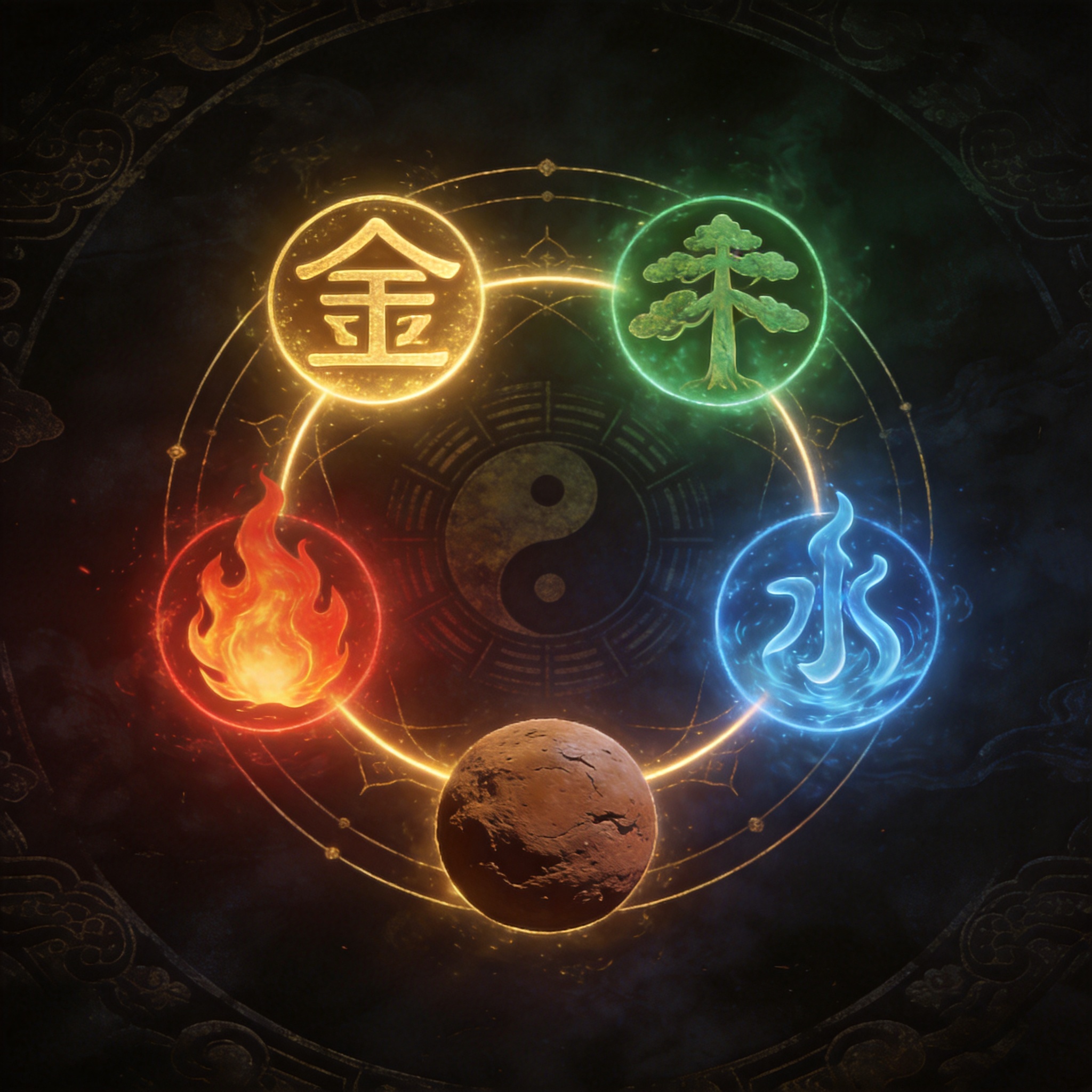
You do not need to suppress anything. You just need to know what you are missing, and fill it in. If your five elements are low on something, you add that element. When you are in the right state, the decisions you make will be different.
Want to know what you are missing? Take a free Five Elements test and find your element.
Take the free Five Elements test to find your element.
Find your element
Take the free Five Elements test