Guangzhou's Changzhou Island: Beyond the Famous Whampoa Military Academy, It Was Once a Foreign Settlement
If you ask a Guangzhou local what is on Changzhou Island, they will almost certainly say the Whampoa Military Academy. But this small island was once a foreign settlement, a customs hub, and a frontline defense.
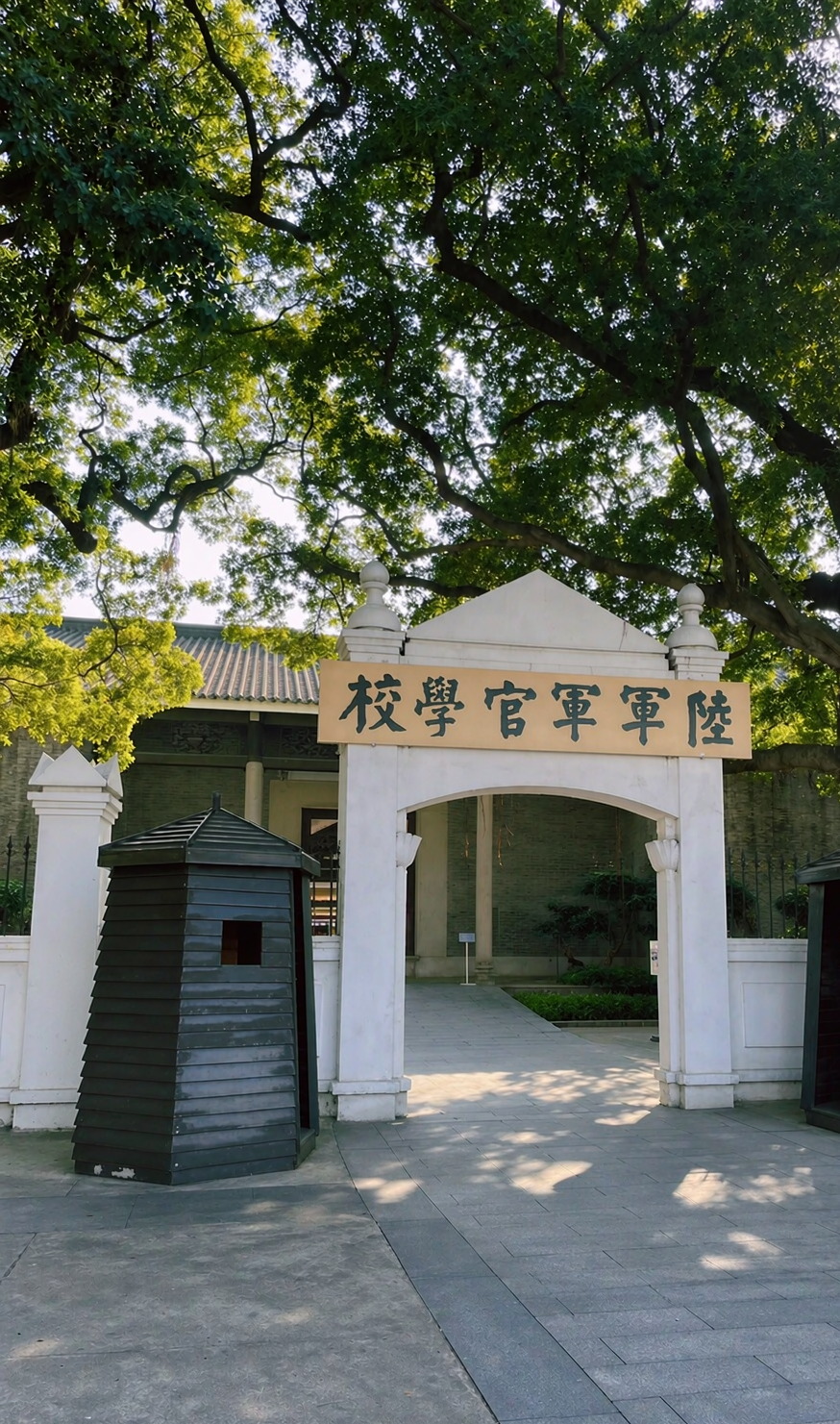
If you ask a Guangzhou local what is on Changzhou Island, they will almost certainly say the Whampoa Military Academy. It is the island's most famous landmark. But if you only visit the academy, you will miss another hidden side of this small island's modern history.

If you ask a Guangzhou local what is on Changzhou Island, they will almost certainly say the Whampoa Military Academy.
It is the island's most famous landmark. But if you only visit the academy, you will miss another hidden side of this small island's modern history.
This place was once a residential area for a large number of foreigners during the Thirteen Factories trade era.
The Qing government implemented the Canton System, strictly restricting foreigners. They could not enter Guangzhou city freely, stay overnight, or bring their families into the city. They needed official permits to enter for business. Without a permit, they had to stay outside the city.
Changzhou Island is located at the mouth of the Pearl River, where the Huangpu Port was, anchoring foreign merchant ships. Therefore, Changzhou and the nearby Huangpu area became their actual foothold.
Since trade was required, there had to be customs to manage the ships and cargo.
At that time, Guangzhou was China's only open trading port. Ships from all over the world stopped at Huangpu Port. The agency managing ship traffic, tax collection, and anti-smuggling was the Huangpu Branch of the Canton Customs, located on the island.
In 1685, the Qing government established the Canton Customs, later setting up a checkpoint near Changzhou. In 1860, the Huangpu Branch was officially established, initially operating from a pontoon boat on the river and moving to buildings on the island in 1872. In 2024, archaeologists discovered a boundary stone of the Canton Customs on White Head Hill on the island, directly confirming its historical presence.
At that time, Guangzhou was the world's silver distribution center. Thirteen Factories merchants were incredibly wealthy. Wu Bingjian, head of the Ewo Hong, was recognized as the world's richest man in the 19th century, with assets reaching 26 million taels of silver.
Changzhou Island witnessed ships loaded with tea, silk, and porcelain coming and going, and the customs collecting taxes.
Behind these fortunes and ships was the unpredictability of life and death.
In October 1846, Alexander Hill Everett arrived in Guangzhou. He was the first US Minister to China, a Harvard graduate. Due to poor health, he served only eight months before dying in June 1847, and was buried on Bamboo Hill on Changzhou.
Bamboo Hill in Shenjing Village was known locally as Fan Gui Shan, designated by the Qing government as a foreign cemetery.
Everett was not the only one buried here. Many merchants and sailors died from scurvy and fever during the difficult voyages. They could not return home or enter the city, so they were buried nearby.
In 2024, a Qing dynasty foreign sailors cemetery was discovered in the northern part of the island, belonging to American East India Squadron sailors who died between 1854 and 1855. Most of these people left no names, and their families might never know where they are buried.
These foreigners who died in a foreign land were swept here by the tide of trade. This quiet cemetery is the most real evidence of Guangzhou's trading era.
However, the situation soon broke the peace here.
In 1856, during the Second Opium War, Guangzhou citizens burned down the Thirteen Factories. Foreign merchants lost their homes of decades. After the war, Britain and France created Shamian, a new concession, upstream.
The center of foreign activity moved to the west of Guangzhou. Changzhou's history as a foreign settlement ended, and the island was left open.
Although the foreigners left, a coastal defense crisis immediately followed.
In 1883, the Sino-French War broke out. The Qing government realized that if Humen was breached, the main channel led straight to the city. Changzhou sat right at the throat of this channel.
Viceroy Zhang Zhidong ordered the construction of forts. Today, the White Crane Fort and White Rabbit Fort remain, with traces of German Krupp cannons. Completed in 1884, Changzhou officially became Guangzhou's second gate.
At the same time, Zhang Zhidong also established the Whampoa Shipyard on the island. It was one of the earliest modern shipyards in South China, building and repairing gunboats to strengthen the coastal defense of the Pearl River.
It was these solid forts, the shipyard, and the defensible terrain that, forty years later, attracted another group of people.
In 1924, Sun Yat-sen founded the Whampoa Military Academy here. Surrounded by water and with existing military facilities from the late Qing, it was the perfect location.
Names like Ye Jianying, Nie Rongzhen, Xu Xiangqian, Lin Biao, and Chen Geng came out of here.
The late Qing forts became classrooms. The White Crane Fort was used for military training, and its traces remain today. Cannons used for defense forty years earlier became teaching tools for young soldiers.
Today, all the golden horses and merchant ships have faded into peace.
Villagers still live here, the forts are ruins, the academy is a memorial, and the cemetery is hidden in the hills.
From the prosperity of customs and the cemetery of a minister, to the burning of the old order, to the defense lines and the shipyard, and finally to the military academy, Changzhou Island is small but folds some of the heaviest pages of Guangzhou's modern history.
Not sure which element is missing from your chart? Take the free Five Elements test at wuxingvibe.com/reading — it takes 60 seconds, and it tells you which stones are for you.
A note from us
We are not historians. We are people from Guangzhou who grew up with these stories. We share them for one reason: the East often looks mysterious, and sometimes frightening — but fear usually comes from not knowing. The more you know, the less there is to fear. And sometimes, the more you know, the more it can help you.
If you enjoyed this, you can reach out to us. You can also take our free Five Elements test — it takes 60 seconds, and it tells you which element you may be missing.
We hope everything goes smoothly for you. And if you ever come to China, we'd love to show you around.
Find your element
Take the free Five Elements test